Switchfly
Leading design on a living travel platform
Product Designer on a deeply customizable travel commerce platform, booking flights, hotels, cars, and activities with points and cash for clients like American Express and JetBlue, across many markets, cobrands, and devices.
3 roles
UX/UI → Senior → Lead in five years
6
Engineering teams supported as IC
5×/yr
Product Increments planned ahead (SAFe)
1 : many
One platform, many clients & markets
One platform, a thousand different experiences
Switchfly is a highly customizable travel commerce platform. End users book flights, hotels, cars, and activities using loyalty points, cash, or both, but who that user is varies enormously. The platform powers travel for airlines like JetBlue, card brands like American Express, and other companies built on loyalty points.
Every client runs any number of markets, US, Canada, Mexico, Australia, Japan and more, and each market carries its own configuration: which features are on, how they behave, how they look, the language, the content, the copy, and custom overrides. The same product can feel like a completely different app depending on the client, the cobrand, and the device.
- Clients: airlines (JetBlue), card brands (American Express), loyalty programs
- Each client runs multiple markets, each independently configured
- Configuration controls features, behavior, design, language, and copy
- The experience differs wildly by client, cobrand, and device
Consistency on top of inconsistent data
Beneath all that customization sat a harder problem. Every product is sourced from external connectors like Expedia, and each connector structures and names its data differently. Presenting an aggregated, trustworthy set of results meant first understanding those variations cold, then designing so they read as consistently as possible no matter where they came from.
So the real design challenge was rarely “make this screen prettier.” It was: how do you create one coherent, scannable experience across inconsistent source data, dozens of market configurations, and clients who can override almost anything?
“The platform could look like almost anything for almost anyone. My job was to make sure it always felt clear.”
What I designed around
Real constraints shaped every decision, and naming them early kept the work honest about trade-offs.
- Multi-client, multi-market: one change had to hold up across many configurations
- Connector data (e.g. Expedia) arrived structured and named inconsistently
- Clients could override copy, content, and interface, so defaults had to be robust
- SAFe delivery: work planned in Product Increments, 1-2 PIs ahead, across six engineering teams
Designing at platform scale, and building the process to do it
I supported six engineering teams as an individual contributor while taking on manager and director-level duties, including managing another designer. Work was planned in SAFe Product Increments, five PIs a year, five sprints each, ten days a sprint, so I partnered with product owners one to two PIs ahead, writing stories and epics in JIRA, with a major release every PI plus minor releases throughout.
To keep design coherent across that surface area, I built process, not just screens. I started twice-weekly “design forum” hours, 60-90 minutes open to Engineering, Product, QA, and Sales, to collaborate and surface insight across the company. And I introduced a new intake process for design requests, with a design story template product owners could actually use.
- IC across six engineering teams; managed one designer
- SAFe Product Increments, planned 1-2 PIs ahead in JIRA
- Founded twice-weekly cross-functional “design forum” hours
- Created a design-request process and a design story template for POs
Between six teams, internal stakeholders, and Amex
Platform work is relentless coordination. Beyond the six engineering teams, I met weekly with internal stakeholders and clients, primarily American Express, to walk through upcoming work, work in progress, and customer feedback on what we’d just shipped.
Managing another designer and running the design forum meant I was as much a connector between disciplines as a maker. The request process and story template existed precisely so collaboration could scale without everything routing through me.
“Weekly time with Amex kept the work honest, I was never more than seven days from real client feedback.”
Flight indicator tooltips & fare rules
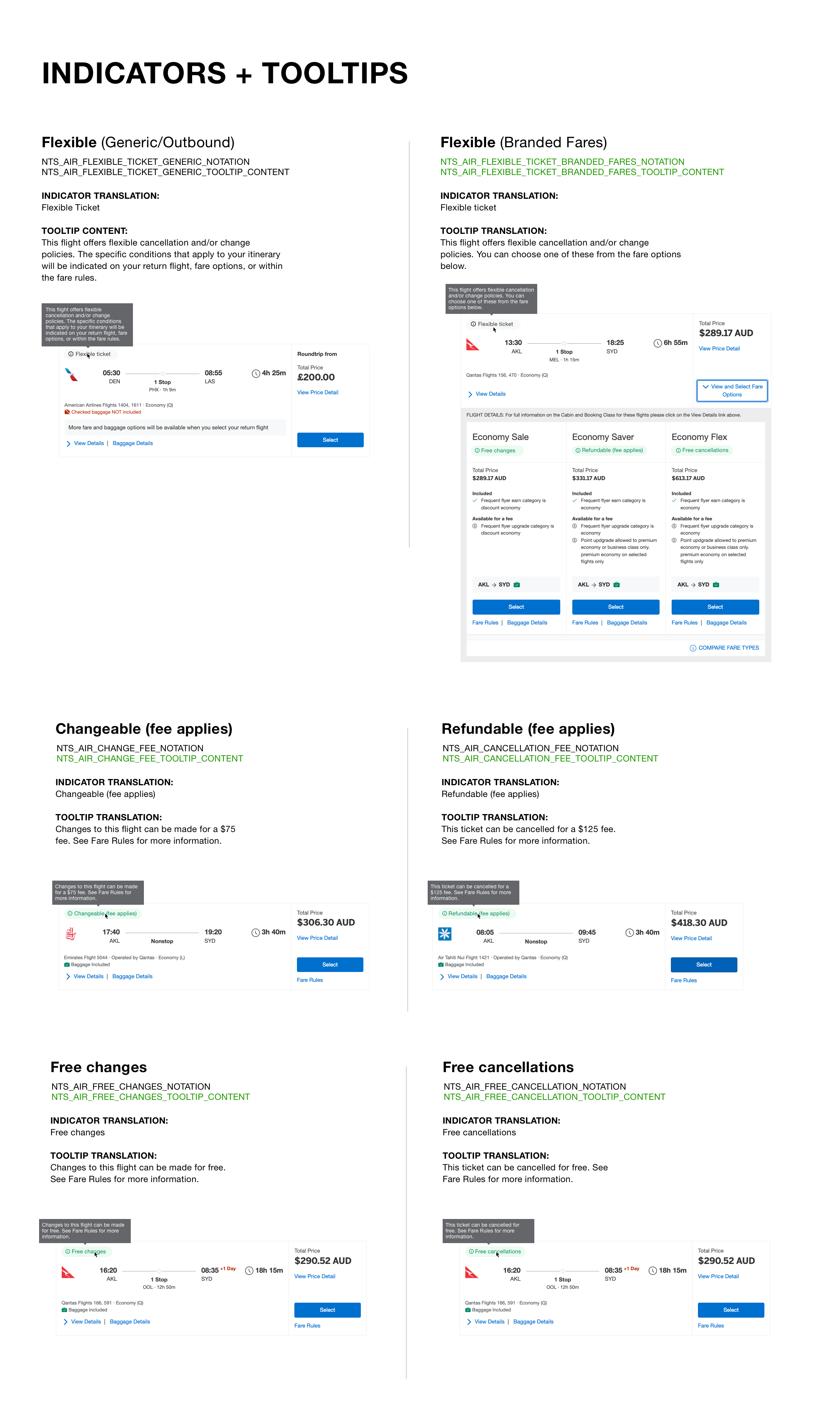
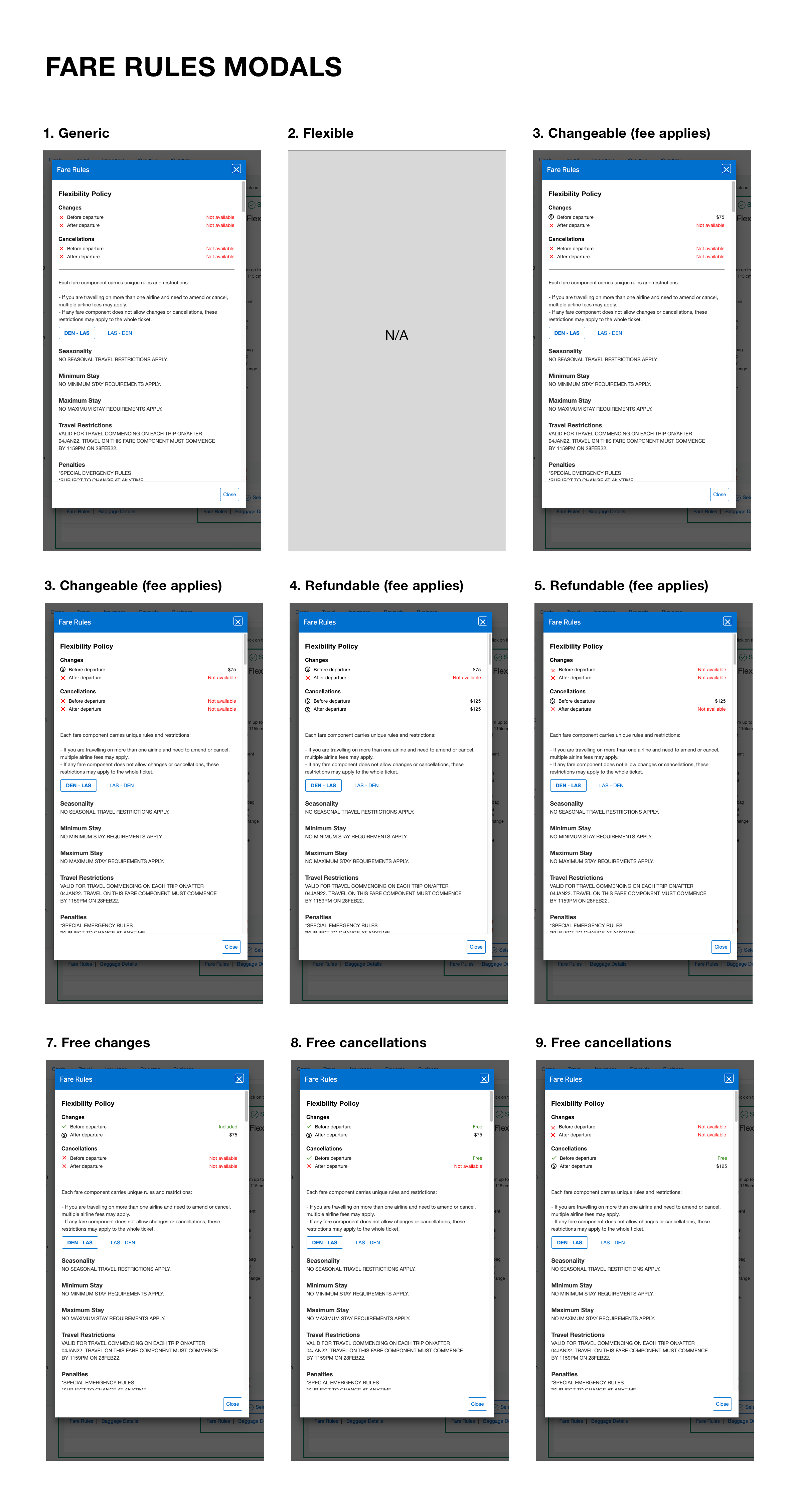
One representative slice: flight search results asked users to interpret fare flexibility, baggage inclusion, and change policies with almost no visual hierarchy. I introduced a clearer indicator framework, concise labels, visual tags, and contextual tooltips that surface the critical details right at the decision point, inside the search result cards.
Because each client can edit the language, I wrote and designed the defaults to reduce ambiguity around fare rules and fees, provide immediate clarification without forcing deeper navigation, and stay visually consistent across the card. Better hierarchy and contextual disclosure lowered the cognitive load of comparing flights and helped users move to checkout with more confidence.
- Reduced time spent on the search results page
- Improved information clarity and scannability
- Supported a faster checkout through quicker, more confident decisions
From XL features to one-client fixes
The work ranged widely in size and scope, the goal, where possible, was always to make it available to every client. Some were brand-new features; some were redesigns of existing pages; some were small, surgical fixes for a single client.
- XL, Online Booking Management (new feature)
- L, Activity page redesign
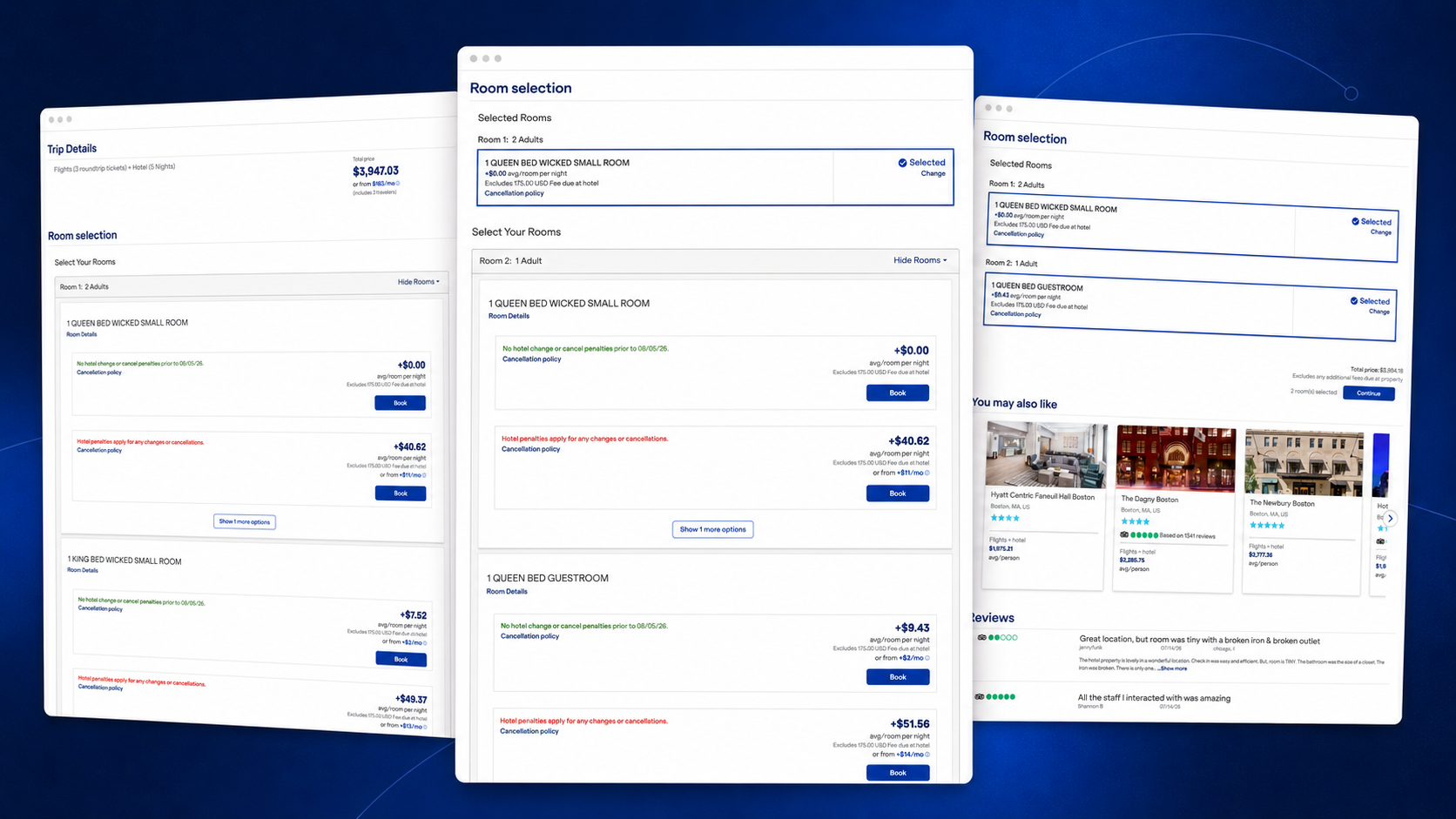
- M, Enhanced multi-room selection (Room Unification)
- S, Handheld fix for an Amex air card
What I’d carry forward
At platform scale, the highest-leverage design work is often invisible: the request process, the story template, the forum, the defaults robust enough to survive a hundred client overrides. Build those and quality compounds; skip them and you’re firefighting screens forever.
I’d also protect the weekly client time even harder. Standing in front of Amex every week is what kept the abstraction, all those configs and connectors, anchored to a real person trying to book a real trip.
Currently open to new roles
Let’s make somethingclear.
Senior, Staff, Lead, or Design Manager, if you’re untangling something complicated and want a designer who thinks in systems, I’d love to hear about it.